A distribution center tells you almost everything about itself in the first thirty seconds. Before anyone shows you a dashboard or quotes a pick rate, the floor already testified: clear aisles or blocked ones, labeled bins or mystery boxes, a staging lane or a pile.
This is not about looking nice for visitors. Cleanliness in a warehouse is an operational metric wearing a janitorial costume. Here is why it matters, which standards formalize it, and how to build it into daily operations without adding a single meeting.
Customers read your floor before they read your proposal
Put yourself in the shoes of a prospect touring your facility, or a brand deciding whether to trust you with their inventory. When they see debris in aisles, unlabeled pallets, and overflowing trash, they do not think "busy season." They assume the operation is run inefficiently, and they start wondering what else is neglected. If the floor is chaos, what does the inventory record look like? Are counts real? Will my orders ship on time?
Fair or not, that inference is usually correct. Mess is rarely just mess. It is deferred decisions made visible: product nobody putaway, returns nobody dispositioned, damage nobody wrote off. A tidy floor signals that the building has habits, and habits are what customers are actually buying.
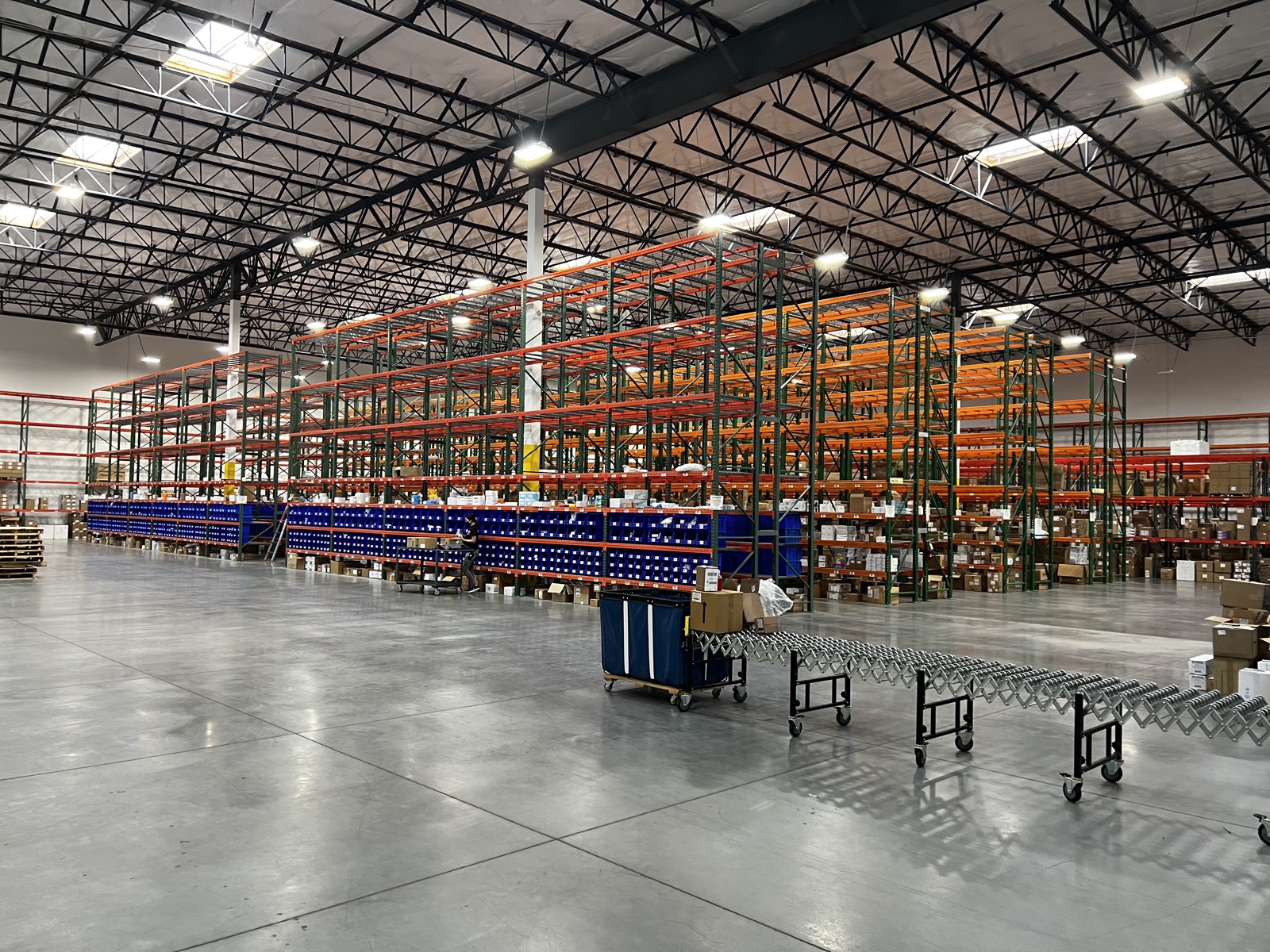
The reverse is just as true. A clean, labeled, well-lit floor like the one above closes deals quietly. It says: we know where everything is, and we can prove it.
Why tidiness is an operations metric
- Pick speed. Every obstacle in an aisle is seconds added to every pick that passes it. Multiply by a few thousand picks a week and clutter has a payroll cost.
- Inventory accuracy. Product sitting on the floor is product that is not in a bin, which means it is not in the system, which means it effectively does not exist. Most "shrink" starts life as a box someone set down for a minute.
- Safety. Slips, trips, and falls remain among the most common warehouse injuries, and nearly all of them involve something that should not have been where it was. OSHA's housekeeping rule (29 CFR 1910.22) requires clean, dry, unobstructed walking surfaces for exactly this reason.
- Damage. Goods staged on the floor get clipped by forklifts and carts. Bins do not.
- Morale and turnover. People do better work in a building that looks like someone cares about it. Nobody brings their best to a dump.
The standards that formalize it
You do not need a certification to keep a clean building, but if you hold or pursue these, housekeeping is not optional. Auditors walk the floor too.
- ISO 9001 (Quality Management) requires you to control your work environment so processes produce consistent output. Blocked aisles and unlabeled staging areas are audit findings, because they make process outcomes depend on luck.
- ISO 45001 (Occupational Health and Safety) treats housekeeping as hazard control. Obstructed egress, unstable stacking, and cluttered walkways are exactly the conditions it exists to eliminate.
- ISO 14001 (Environmental Management) touches waste handling: segregated, labeled, properly stored waste streams instead of a corner where cardboard goes to die.
- 5S (Sort, Set in order, Shine, Standardize, Sustain) is not an ISO standard, but it is the methodology most auditors expect to see behind a consistently clean floor. It turns cleanliness from an event into a system: everything has a place, and anything out of place is visibly wrong.
If your customers are brands with their own quality programs, expect their auditors to hold you to these whether you are certified or not.
Warehouse housekeeping tips that survive a busy season
- Clean as part of the job, not after it. End-of-shift resets beat monthly blitzes. Ten minutes a day keeps the floor honest; a quarterly purge just documents how bad it got.
- Give everything an address. Floor product is usually product with nowhere to go. If bins overflow into aisles, that is a slotting problem wearing a housekeeping costume.
- Draw the lines. Tape and paint are the cheapest supervisors you will ever hire. Marked pick paths, staging lanes, and trash points make "out of place" visible from fifty feet.
- Kill the "for now" pile. Every warehouse has a spot where things get set down "for now." Give it a deadline: anything in the penalty box longer than a shift gets dispositioned.
- Put returns and damage on a clock. These are the two streams that rot into clutter fastest. A daily disposition pass keeps them moving.
- Make it inspectable. A five-minute walk with a short checklist, done by a different person each week, catches drift while it is still cheap to fix.
- Let your systems remove the paper. A meaningful share of warehouse clutter is process residue: printed pick lists, handwritten count sheets, sticky notes on pallets. Work that happens on a scanner or a phone leaves nothing on the floor.
The end-of-shift floor checklist
The seven habits above compress into a five-minute reset any shift lead can run. Print it, laminate it, or put it on the handheld:
- Pick paths and aisles clear end to end
- No product on the floor without a bin address
- Staging lanes hold only today's outbound
- "For now" pile empty or dispositioned
- Returns and damage queues touched today
- Trash and cardboard at their marked points, not beside them
- Anything out of place flagged with an owner and a deadline
If the same box fails two days in a row, that is not a cleaning problem. It is a process problem, and it is telling you exactly where to look. Pair the walk with a cycle counting program and the floor and the inventory record start policing each other.
The software angle, briefly
A WMS will not sweep your floor. But most persistent mess is inventory that fell out of the system: unlabeled pallets nobody putaway, returns with no disposition, staging that became storage. When every item has a bin, every task has an owner, and picks are assigned to your team automatically, far less product ends up homeless in the first place. OpsBox runs receiving, putaway, picking, and counting on any scanner or phone, so the process leaves a clean data trail instead of a paper trail.
And if you are wondering about your systems: OpsBox has connectors for all major ERPs. Whatever you run, tell us your ERP needs when you reach out and the connection will be ready before your implementation starts.
A clean building and a clean inventory record are the same discipline applied at two altitudes. Customers can see the first one from the doorway, and they are right to assume it predicts the second.
Frequently asked questions
What is 5S in a warehouse? 5S is a lean methodology for workplace organization: Sort, Set in order, Shine, Standardize, Sustain. In a warehouse it means every item, tool, and cart has a marked home, cleaning is part of the daily job, and anything out of place is visibly wrong. It is the system most auditors expect to find behind a consistently clean floor.
What does OSHA require for warehouse housekeeping? OSHA's walking-working surfaces rule (29 CFR 1910.22) requires workrooms, passageways, and storerooms to be kept clean, orderly, and sanitary, floors to be kept dry where possible, and walking surfaces to be free of hazards like clutter, protruding objects, and spills. Blocked aisles and obstructed exits are among the most commonly cited violations in warehousing.
Which ISO standard covers warehouse cleanliness? No single ISO standard is "the cleanliness standard," but three touch it directly: ISO 9001 requires a controlled work environment as part of quality management, ISO 45001 treats housekeeping as occupational-safety hazard control, and ISO 14001 governs how waste streams are segregated and stored. Auditors for all three walk the floor.
Does a WMS help keep a warehouse clean? Indirectly, yes. Most persistent clutter is inventory that fell out of the system: unlabeled pallets, undispositioned returns, staging that became storage. A warehouse management system that gives every item a bin, every task an owner, and every pick an assignment leaves far less product homeless on the floor, and removes the paper that makes up much of the remaining mess.